
The Penny Test for Tires (and a More Accurate Backup)
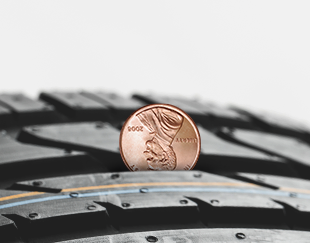
You've probably heard of the penny test for checking tire tread depth and yes, it's a real, reliable way for anyone to get a quick read on their tire condition without special tools. Here's how to do it correctly, plus a slightly more accurate version using a quarter that many safety experts now recommend.
How to Do the Penny Test
- Take a penny and insert it upside down into a tread groove, so the top of Lincoln's head points into the groove.
- Check multiple grooves across the tire (left to right) and at multiple points around the tire, since wear is often uneven.
- If part of Lincoln's head is covered by the surrounding tread, you have at least 2/32" of tread remaining.
- If none of his head is covered, you're below the legal minimum tread depth and need new tires immediately.
The Quarter Test (More Accurate, Earlier Warning)
- Insert a quarter upside down into the tread groove, with the top of Washington's head pointing in.
- If part of Washington's head is covered by the tread, you have at least 4/32" of tread remaining a safer cushion, particularly for wet-weather driving.
- If his head is fully exposed, it's a good time to start planning for new tires, even though you may not be at the legal minimum yet.
If you pass the quarter test comfortably, your tires are in good shape. Either way, also check your tires' built-in tread wear bars small raised bars that run laterally across the tread grooves. When the surrounding tread wears down to be level with these bars, that's another clear signal it's time to replace your tires.
For a more precise measurement than either coin test, a low-cost tire tread depth gauge from any auto parts store will give you an exact reading in 32nds of an inch.
Worn tires are a major factor in losing control during a skid or in wet weather see our guide on handling driving emergencies for what to do if your tires fail you on the road.