
The Hazards of Driving in Bad Weather
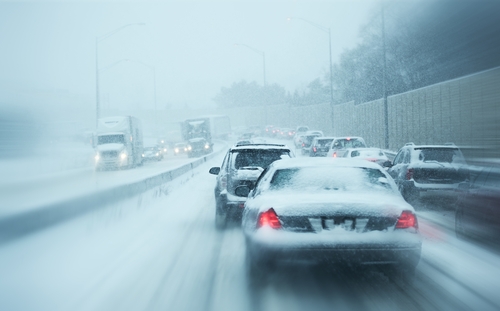
Many drivers underestimate how dangerous adverse weather can be especially if they haven't driven through heavy rain, snow, or fog before. Rain, fog, ice, snow, and dust all limit your visibility and reduce your tires' grip on the road, which is why it's worth knowing the warning signs and adjusting your driving well before conditions get dangerous.
As a general rule: if the weather is bad enough and you can avoid driving, don't. If you do need to drive, here's how to do it more safely in the most common severe weather conditions.
Rain or Storms
Rain makes it harder to see other vehicles, signs, and the road itself and at the very start of rain, roads are often most slippery, since moisture mixes with oil and dust that hasn't washed away yet.
- Check your tire tread. Use a quarter inserted upside down into the tread if part of Washington's head is always covered, you have more than 4/32" of tread left. If his head is ever fully exposed, it's time to replace your tires. (See our full tire tread depth guide for more detail.)
- Check tire pressure monthly with a tire gauge.
- Make sure your windshield wipers are in good condition before you need them.
- Check headlights, taillights, brake lights, and turn signals turn headlights on in the rain to boost your visibility (required in some states whenever wipers are running).
- Slow down. Wet pavement reduces tire traction significantly, and stopping or adjusting takes longer.
- Increase your following distance aim for at least 5 seconds behind the vehicle ahead in wet conditions, versus the standard 3-second rule in dry weather.
- Avoid following large trucks or buses too closely; their tire spray reduces your visibility.
Handling Hydroplaning
Hydroplaning happens when your tires ride on top of a layer of water and lose contact with the pavement it can occur at speeds as low as 35 mph. You'll feel your steering go light. If it happens:
- Take your foot off the accelerator.
- If you don't have anti-lock brakes, pump the brake pedal gently to slow down.
- Hold the steering wheel firmly and keep the vehicle pointed in the direction of the road.
- Once the tires regain contact with the road (the car will feel like it slows and grips again), apply the brakes to reduce speed further.
Fog or Heavy Smoke
The best advice for fog or heavy smoke is simple: don't drive in it if you can avoid it. If you must, drive slowly, use your wipers and low-beam headlights never your high beams, which reflect off fog and create glare and never drive using only your parking or fog lights.
Increase your following distance and be ready to stop within the distance you can actually see. Avoid passing or crossing lanes unless absolutely necessary, and listen for traffic you can't see. If visibility drops too low to continue safely, pull off the road, turn on your hazard lights, and wait for conditions to improve.
High Winds
High winds are especially hazardous for trucks, campers, and vehicles towing trailers.
- Reduce your speed for better control and more time to react to gusts.
- Keep a firm grip on the wheel strong gusts can jerk the wheel unexpectedly.
- Stay alert for debris that wind can carry onto the road.
- Turn off cruise control so you keep full control of the accelerator.
- Be willing to pull over and wait out a particularly severe gust or storm.
Driving With Sun Glare
- Keep both sides of your windshield clean.
- Keep wipers and wiper fluid topped off and in good condition.
- Wear polarized sunglasses.
- Maintain extra space between your vehicle and others.
- Watch closely for pedestrians, who can be harder to spot in glare.
- When possible, avoid driving directly into sunrise or sunset.
Driving in Darkness
Night driving is inherently more hazardous than daytime driving. Make sure you can stop within the distance your headlights illuminate, and use low beams in rain at night. Never drive using only parking lights.
Use high beams when legal and appropriate in open or dark areas, but dim them for oncoming traffic. If an oncoming vehicle's headlights are too bright, don't look directly at them look toward the right edge of your lane and track the oncoming vehicle in your peripheral vision instead.
- Pedestrians and cyclists are much harder to see at night stay alert for them.
- Motorcycles can be harder to spot, since many have only a single taillight.
- Highway construction sometimes happens at night reduce speed in those zones.
- After leaving a brightly lit area, drive slowly until your eyes adjust to the dark.
- A vehicle showing only one light at night could be a motorcycle, bicycle, or a car with a broken headlight stay cautious and give it extra room.